Classical Guitar 101: String Names, Finger Names and More
Are you beginning to learn the guitar? If so, you’re in the right place.
Some basics (such as the guitar strings’ order) are handy to know from the start.
In standard tuning, a six-string guitar is tuned to the notes E, A, D, G, B, and E. The thickest string is the lowest-pitched (ie sounds the lowest). The thinnest is the highest-pitched string. We can remember the order of the guitar string notes by using fun sayings like “Eddie Ate Dynamite, Good Bye Eddie” or “Eat A Dead Grasshopper Before Everything”.
We’ll discover more about guitar string notes in this article. And we’ll explore more classical guitar need-to-know basics. For instance, the names we use for our fingers. And how we tune a guitar.
However, the most important part of learning guitar is playing guitar. This means your hands are on the instrument, and you are doing something intentional. As a beginner, just about anything you do on the guitar will bring you forward.
So certainly learn the guitar lessons below. But let your main goals include fingers touching guitar strings.
Table of Contents
- What are the Names of the Guitar String Notes?
- The Guitar Finger Names
- Parts of the Guitar
- How to Tune Your Guitar
- How Olde-World Tunings Led to the Current Standard Guitar Tuning
- Common Alternate Tunings
- Open Chord Tunings
What are the Names of the Guitar String Notes?
We usually recite the note names of the strings in order from thickest to thinnest. So in standard tuning, the guitar string notes are E A D G B E.
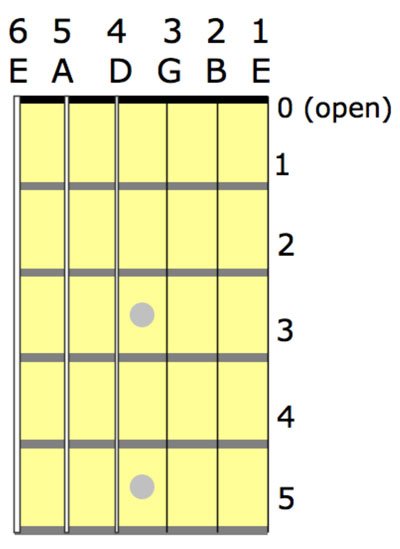
We can see them listed across the top of this diagram below. (The numbers down the right-hand side refer to the fret numbers. This is explained later.)
Click here for a lesson in learning to read musical notation for guitar.
How to Memorize Guitar String Notes in Order (Mnemonics)
It can be difficult to memorize the guitar strings’ order. A mnemonic device may be a helpful way to remember “E A D G B E”. This method gives a word for each letter in an easy-to-remember phrase.
Some common guitar string name mnemonics are:
- Elephants And Donkeys Grow Big Ears (“Dogs” is also common for D)
- Eddie Ate Dynamite, Good Bye Eddie
- Every American Dollar Goes Back East
- Every Acid Dealer Gets Busted Eventually
The trick is making them fun. Each of these acronyms appeals to different ages and personalities. There are countless others, and you can make up your own.
How Guitar Strings’ Order Relates to Tuning
The names of strings on a guitar directly correspond to their pitches in standard tuning. We name the string after the note it produces when it’s played without any fingers on the frets. It’s then called an “open string”.
Here are the guitar strings’ names in order.
- 6th string (thickest): E (lowest pitch)
- 5th string: A
- 4th string: D
- 3rd string: G
- 2nd string: B
- 1st string (thinnest): E (highest pitch)
When we tune our guitar, we’re adjusting each string’s tension until it produces these specific notes. If we use an electronic tuner, we’re likely to see these letter names displayed.
The guitar strings’ order is an essential reference point for learning notes on the fretboard. It also helps us to read tablature, and communicate with other musicians about technique and fingering.
The Guitar Finger Names
On the guitar, we have names for our right- and left-hand fingers.
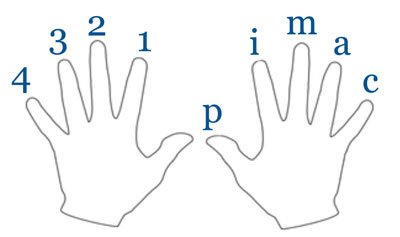
Classical Guitar Finger Names
Finger Names for the Left Hand
First, the left-hand fingers on the guitar are named 1, 2, 3 and 4. This is from the pointer (index) to the little finger.
The thumb is just the thumb. No number. (Though in some folk method books we see it labeled “T”, or “0.”)
So for the Left Hand:
- Index Finger = 1
- Middle Finger = 2
- Ring Finger = 3
- Pinky Finger (little finger) = 4
- Thumb = Thumb
Click here for beginner exercises for the left-hand fingers.
Finger Names for the Right Hand on Guitar
We use the right-hand fingers continually when we play classical guitar. The names below have been standard for generations. They are named after finger names in Spanish. (Some folk tutor books occasionally use different finger names, but these are the ones most people use.)
Right-Hand Fingers:
- Thumb = P (pulgar)
- Index Finger = I (indice)
- Middle Finger = M (medio)
- Ring Finger = A (anular)
- Little Finger = C (chiquito. d, ñ, and ch are also used)
Click here for a beginner lesson on good right-hand movements for classical guitar.
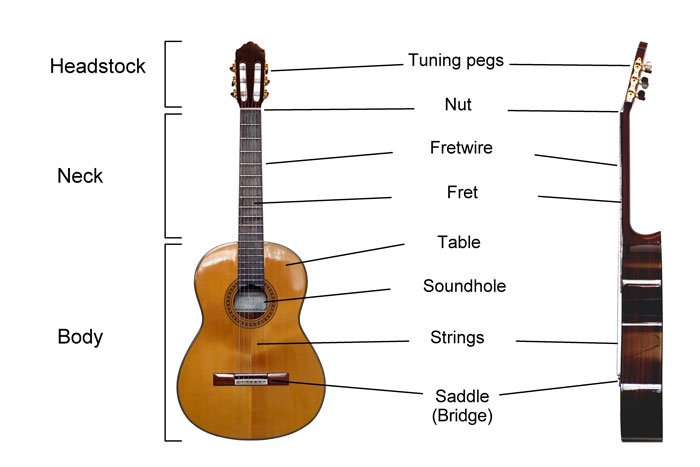
Parts of the Guitar
Each part of the guitar has a name. Apart from a few key guitar terms, these are largely trivia (unless you build guitars).
The guitar parts are named after human body parts. Looking at the guitar, we can imagine a long-necked woman. This is said to have inspired the names.
The most important to know (for practical use) are the strings, frets and tuning keys.
Fret Numbers on Guitar
The “frets” are the metal crosspieces on the guitar neck. The frets and the neck together are also referred to as the guitar “fretboard”.
Frets are numbered. (See neck diagram above.) Zero (0) is the open string. This means no fingers are pressed on the string.
From there, we call them in order, starting with one (1) and moving up. On a classical guitar, the body usually meets the neck at the 12th fret. (More on parts of the guitar below.)
When pressing a finger on a string, it’s best to position it just behind the fret. This sounds best and takes the least effort.
How to Tune Strings on Your Guitar
We can tune a guitar in several ways. The easiest tuning method is to use an electronic tuner or app.
You can search your phone or device’s app store for “guitar tuner” and find free and paid-for options. When doing so, it helps to know the names of the open strings on a guitar and the guitar strings’ order. (See above.)
Relative Tuning for Strings on a Guitar
Another easy way of tuning is to make one open string sound like a note on another string. This enables us to get the guitar’s strings in tune with each other. It’s called “relative tuning.”
Using this method, the guitar may not be in tune with what the rest of the world defines as “in tune”. Standard tuning is A = 440hz. This means that the note “A” vibrates 440 times per second. This is what most tuning forks are set to. And this is what an electronic tuner will tell you is “in tune”.
No matter. The main thing is that you can play guitar notes and they sound good.
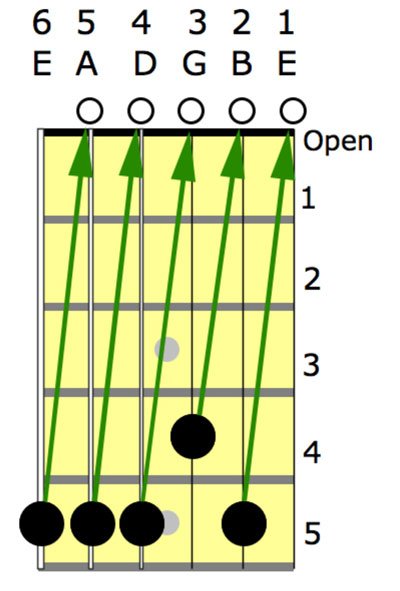
To tune a guitar, play the note with the black dot and match the sound to the adjacent open string.
Here’s the method:
- Place a finger on the fifth fret of the bottom string (low E string). Make a nice tunnel inside your hand so you don’t touch the 5th string.
- Now play the open (no fret pressed) 5th string.
- These two notes should sound the same. If not, turn the tuning key for the 5th string until it matches the 6th string pitch.
- Then repeat with the other strings.
One exception: when we go to tune the 2nd string, we press the 4th fret of the 3rd string (G string), not the 5th fret like all the others.
So the order of frets, from string six down to one are: 55545
This will take some getting used to. Tuning by ear takes practice. To help train your ear, you can first use an electronic tuner or app, then go through this process afterward. This will help you learn what “in tune” sounds like. And it will let you practice the guitar tuning process, without having to actually tune.
For more methods to tune your guitar, see this tutorial.
How Olde-World Tunings Led to the Current Standard Guitar Tuning
From the Renaissance forward, guitar tunings have become more standard. With the rise in printing and popular method books, trends were set and continue.
Evolution from Early Stringed Instruments
The guitar has a long history dating back to ancient times. Early stringed instruments, such as lutes and vihuelas, had various tunings. The guitar’s tuning evolved from these instruments. The aim was to create a tuning that balanced playability, range, and harmonic possibilities.
Standardization
Over time, as the guitar became more popular in Europe, certain common tunings began to emerge as standard. EADGBE tuning gradually gained popularity because it was possible to play melodies over open chord shapes.
Influence of Western Music
Western musical tradition often involves playing in keys like C major, G major, D major, A minor, and E minor. EADGBE tuning provides open chord shapes for these keys, making it easier for guitarists to play in those keys without excessive retuning.
Chord Shapes and Ease of Play
EADGBE tuning offers a wide range of chord shapes that are relatively comfortable for guitarists. It allows for easy access to common major, minor, and dominant chords in various positions on the fretboard.
Historical Precedent in Guitar Tuning
By the late 19th and early 20th centuries, EADGBE tuning had become widely accepted as the standard guitar strings’ order. Many guitar methods and tutor books were written around this time.
Common Alternate Tunings
There are near-infinite tunings possible. We are limited only by our imaginations and the number of strings on a guitar.
Over the years, some alternate tunings have proven useful and popular.
Drop D – D A D G B E
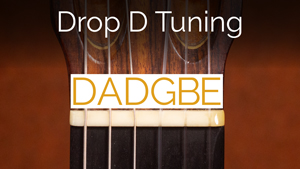
Drop D is the second most common tuning for classical guitar music. We tune the low E (6th string) down two tones to D.
This tuning expands the low register of the guitar and gives a rich, resonant sound. It also provides for the three lowest strings to sound good together. This can create a drone or “pedal.” And it allows the guitarist to play higher on the others while keeping the low strings ringing.
Renaissance Tuning: E A D F# B E
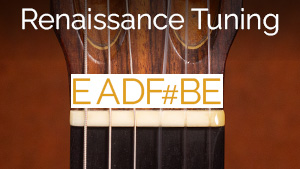
For many Renaissance lute songs, we tune the G down to F#. This was a popular tuning of the day.
Lutes generally have several bass strings. So the player would mainly fret on the higher strings while playing the low lines with open strings. This tuning worked well for that.
D A D G A D
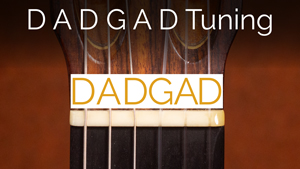
DADGAD is popular in Celtic music and with fingerstyle players. It lends itself to over-ringing notes and drone effects.
Many famous guitarists have used DADGAD. Such as:
- Pierre Bensusan: A French-Algerian guitarist known for his fingerstyle acoustic guitar work.
- Jimmy Page (Led Zeppelin): Page used DADGAD tuning for several Led Zeppelin songs. These included “Kashmir” and “White Summer/Black Mountain Side.”
- Davey Graham: An influential British guitarist and folk musician. Davey Graham popularized DADGAD tuning in the folk and acoustic guitar world.
- Richard Thompson: A British folk-rock guitarist and singer-songwriter. Richard Thompson has used DADGAD tuning in his acoustic and electric guitar playing.
Open Chord Tunings
The tunings below create a full chord when all open strings are played. This lends itself well to slide guitar.
Players using these tunings may use a capo to change the open chord to match the current song.
Open D – D A D F# A D
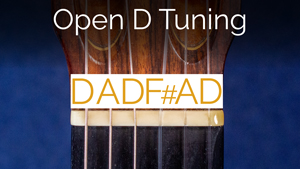
Used by: Duane Allman (The Allman Brothers Band), Ry Cooder
Open G – D G D G B D
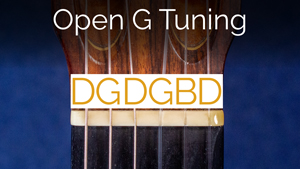
Used by: Keith Richards (The Rolling Stones), Bonnie Raitt, Derek Trucks
Open E – E B E G# B E
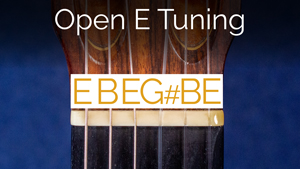
Used by: Jimmy Page (Led Zeppelin), Rory Gallagher, Joni Mitchell
While Joni Mitchell is known for using various alternate tunings, she has occasionally employed Open E tuning in her songs, such as “Big Yellow Taxi.”
Open C – C G C G C E

Used by: John Fahey, Nick Drake

Hi, I’m Allen Mathews.
I started as a folk guitarist, then fell in love with classical guitar in my 20’s. Despite a lot of practice and schooling, I still couldn’t get my music to flow well. I struggled with excess tension. My music sounded forced. And my hands and body were often sore. I got frustrated, and couldn’t see the way forward. Then, over the next decade, I studied with two other stellar teachers – one focused on the technical movements, and one on the musical (he was a concert pianist). In time, I came to discover a new set of formulas and movements. These brought new life and vitality to my practice. Now I help guitarists find more comfort and flow in their music, so they play more beautifully.
Click here for a sample formula.
Thanks to you (you are my only teacher) in only a few months I've gone from very basic beginner pieces to having just completed learning Bach's Gavottes 1&2 in good form and execution. As a non-classical electric guitarist who has always used a pick and never his fingers, this has been no small feat!
~ Gregg Olson
-Gregg Olson
I also want to thank you for including more video lessons on the Bridges Guitar Series. I have learned to play Calatayud's Waltz. The most exciting thing about having done this is that I sight-read the entire piece as I was learning it. Six months ago looking at a sheet of music was like looking at Egyptian hieroglyphics. Learning to read notation is empowering and I appreciate the sensible way you are teaching us to learn to read music.
~ Steve Simpler
-Steve Simpler
“Success lies in relentless execution of the basics.”
Join the program that takes you from the beginning fundamentals to advanced mastery, so you…
- Move your hands safely and fluidly
- Enjoy fulfilling practices and meaningful work
- Play beautifully with expression and flow
Click the button to take a step towards an
organized, effective guitar practice. >>>