How To Teach Yourself Classical Guitar (even if you live on the moon)
If you don’t have the money or the time to learn classical guitar with a specialist teacher, don’t give up. There are ways we can teach ourselves to play guitar.
We can study classical guitar from books, videos, or DVDs. We could take classical guitar courses online. We could also join a structured online school or program.
Or easiest of all, we could search for videos on YouTube.
But which of these is the best way to teach ourselves how to play?
This article explores how:
- Learning by yourself is not ideal, but it’s possible
- There are many resources to choose from, but following a proven path helps
- Attitude is everything. Manage expectations and stay open to new ideas
- An online guitar program can organize your practice for better results
Table of contents
- The Ideal Way to Learn Classical Guitar
- Is it Difficult to Play Classical Guitar?
- How to Choose Classical Guitar Music to Play
- Learn Classical Guitar: Resources for Study
- Books on Playing Classical Guitar
- DVDs
- Get a Library Card
- Record Yourself and Learn Classical Guitar More Quickly
- You Can Learn Classical Guitar by Yourself
- Join The Woodshed® Classical Guitar Program
The Ideal Way to Learn Classical Guitar
To start with, let’s imagine the ideal scenario.
In a perfect world, we would have some great learning tools at our disposal.
We would find an excellent teacher for classical guitar lessons. This could be through a music school, Skype, FaceTime, Google chat or some other WebCam service. We could ask questions as they arise, and get an immediate answer.
Or we could work with a service that provides video reviews. We’d send in a short video. A teacher would then send one back with feedback on our playing. They would check our sitting position, hand position, and technique. (These are things that, as a beginner, we don’t necessarily know we don’t know!)
Having another set of eyes and ears on what we are doing is nice. It takes such focus to learn to play the guitar, we often miss something.
“Ideally, we would work with a teacher in every single practice.”
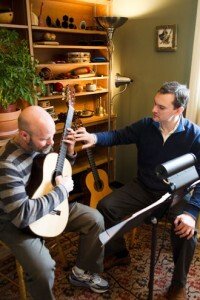
This is why the highest-level performers in any sphere work with coaches and/or peers. They seek out objective feedback.
In a perfect world, we would work with a teacher or coach in every single practice. We would imitate their movements and learn by “mirroring” elite playing techniques.
In our ideal world, we would work on music that we love and that excites us. This is motivating and makes everything more fun.
We would know how to practice. We’d understand how to be efficient with our time, and how to focus. We would structure our sessions so that we develop many skills incrementally. We would work in different ways on different activities each day. (To learn more about the basic ingredients of great practice, go here).
But life’s not like that.
Most of us, for one reason or another, are not in the perfect ideal situation.
Many of us have to compromise.
So how do we compensate for these non-perfect scenarios? How can we still have a rich and rewarding experience?
Can we teach ourselves, when many agree that classical guitar is difficult to play?
Is it Difficult to Play Classical Guitar?
Learning classical guitar can present a unique set of challenges. But we can teach ourselves with dedication and the right approach.
Here are some factors that differentiate playing classical guitar from rock or acoustic styles.
- Technique:
- Classical guitar requires precise techniques in both left and right hands. This can be more demanding than strumming chords with a pick.
- Proper hand positioning and posture are critical and can take time to master.
- Repertoire:
- Classical guitar music often involves complex compositions with several voices.
- Pieces can be technically demanding and need significant practice to perform well.
- Reading Music:
- Classical guitarists generally play from music notation rather than tablature. This is unlike many other guitar styles.
- This means learning music theory.
- Musicality:
- Classical guitar emphasizes expressiveness and tone quality. It requires a deep understanding of musical phrasing and interpretation.
- Developing this can take time and patience.
If we want to teach ourselves, we need to focus on consistent, regular practice, and perseverance. And we need to value gradual progression.
So let’s examine the ways we can do this.
How to Choose Classical Guitar Music to Play
If we don’t have a top-notch teacher, we might choose a repertoire that doesn’t suit our ability.
Appropriate Repertoire
This is easy to mess up when we teach ourselves. We may not have a clear perspective on our present level. We may not be able to judge the difficulty of pieces.
There are ways to address this problem once we are aware of it.
We can use a method book, an online course, or join an online guitar program. This will help us with music theory and notation. And it will also direct us through a predefined classical guitar course. More on this later.
If you are keen to choose your own repertoire instead, then the recommendation is simple. Choose something you love, get hold of the sheet music, and dive into it headfirst.
Of course, you could make decisions that an experienced teacher would disagree with. But, hey, no one gets hurt. (Conversely, learning advanced surgical techniques this way could be bad.)
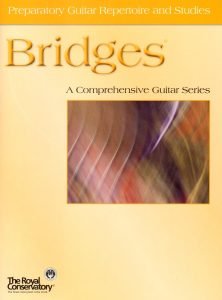
I am a fan of the RCM Bridges Repertoire Series. They have compiled some rewarding pieces, graded by level of difficulty. You can also listen to tunes from the first couple of books: Download Bridges mp3s
Free Sheet Music
There’s so much free sheet music on the internet. It’s tempting to download anything and everything you can get your hands on.
But not all editions are created equal.
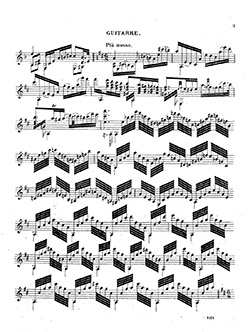
The website IMSLP is a treasure trove of classical-style guitar music. But a facsimile of a study by Sor for instance, is not the easiest to read. We can run the risk of becoming demotivated.
Instead, find pieces that are categorized according to skill levels. And if you prefer, find ones that offer TAB as well.
Make sure that the pieces you are downloading are:
- legal to download
- professionally edited and easy to read
- offering appropriate fingering and marks of expression
The ClassicalGuitarShed.com library is an excellent place to start. We have over 1000 pieces of free guitar sheet music with TABs you can download and play.
Learn Classical Guitar: Resources for Study
There are many fine method books and tutorial DVDs out there. We won’t get feedback, as we would from a taught lesson. But they are certainly better than nothing.
They can also provide great background education. They will expose us to methods of classical guitar technique. They will introduce repertoire. And they will offer tips and ways of working that you might not have considered.
Books on Playing Classical Guitar
There are many books dedicated to learning classical guitar.
Many of the 19th-century players wrote their own methods. And many have been written since the Bream and Williams heyday of the 1960s and ’70s.
Some potentials for your library are:
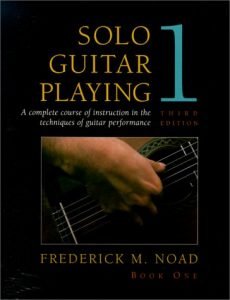
Solo Guitar Playing (Frederick Noad)
Takes you from the beginning, step by step, with teacher accompaniments.
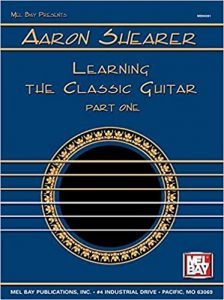
Classical Guitar Technique (Aaron Shearer)
Julio Sagreras’ Guitar Lessons

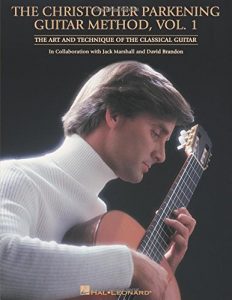
The Christopher Parkening Guitar Method
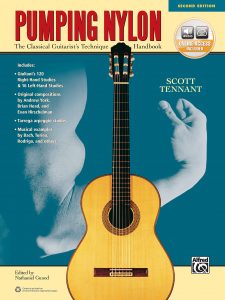
Pumping Nylon(Scott Tennant)
The Art of Classical Guitar Playing (Charles Duncan)
Not a beginner’s method book, but a great reference (especially the chapter on nails).
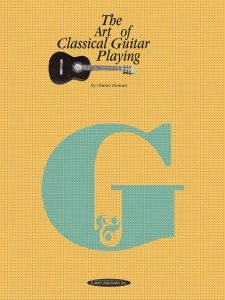
There are tons more, but these are a few common ones.
Free Ebook: Learn Any Piece in 7 Easy Steps
Other recommended books
These are more general books on music and how to practice effectively. They are not specifically guitar methods. But they are great for any musician:
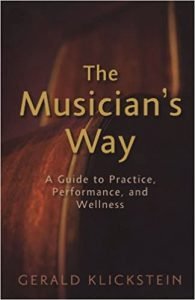
The Musicians Way (Gerald Klickstein) – If you can only have one, this one’s pretty good.
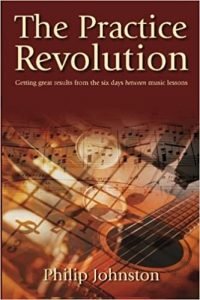
The Practice Revolution – (Philip Johnston) – How students practice: What works and what doesn’t.
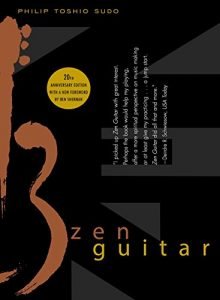
Zen Guitar (Philip Toshio Sudo) – The name says it all.
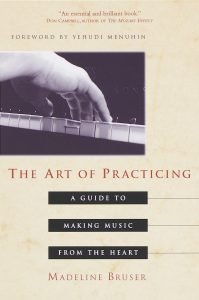
The Art of Practicing (Madeline Bruser) – On playing from the heart. A lovely book with a 10-step approach to daily practice.
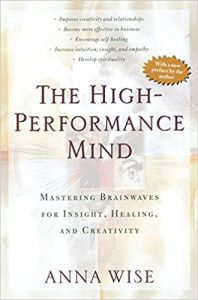
The High-Performance Mind (Anna Wise) – On optimizing performance using brainwave frequencies. I find this kind of work incredibly helpful for focusing and performing. Not music-based.
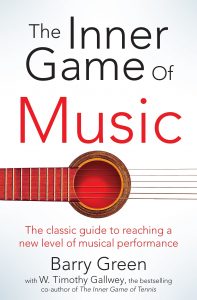
The Inner Game of Music (Barry Green) – On getting past our silly minds and just making great music.
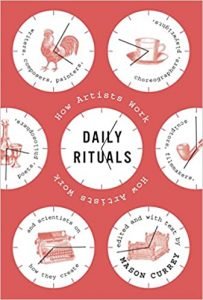
Daily Rituals: How Artists Work (Mason Curry) – A fun read. Look into the lives of history’s great artists, writers, musicians, and thinkers.
Practical Practice: The 7-Step Method
DVDs on Playing Classical Guitar

There is some fine teaching available on DVDs. Depending on your level and your specific needs, these could be more or less useful at any given time.
I have not worked extensively with DVDs, and my knowledge of them is limited. But I can enthusiastically recommend William Kanengiser’s “Effortless Classical Guitar”. It’s suitable for guitarists of any level as an educational resource.
Get a Library Card
The beauty of books and DVDs is that you can check them out from your local library, so cost is not an issue. They often have sheet music, CDs and vinyl too.

Getting well-acquainted with your local library resources is time well spent. They can usually order anything they haven’t got in stock.
You can also use your library to preview different resources. Then you can buy the ones that you connect with the most.
Record Yourself and Learn Classical Guitar More Quickly
(—>>>If you are out to teach yourself classical guitar, this is the most important section of this whole article. Do this, and you will move forward in your playing. Seriously.)

Even if you have no teacher or resources, you can video or audio record yourself. Record a session playing guitar and review it.
This will give you some structure to your classical guitar practice. It provides noticeable results.
Even if you do live in a fairy-tale world and have it all, this is still great practice.
And it’s not just for the beginner. Many high-level performers use this as the main form of preparation for performances.
Here’s the routine:
1) At the end of each practice, record yourself (either audio or video).
Use your phone, or any recorder you have. Quality is not imperative.
You can record snippets of pieces you are working on, or the the whole lot. If you are playing guitar exercises, scales, chords or arpeggios, you can record those as well.
Give yourself just a single pass or two at anything that you are recording. Play as well as you can, but the point is not studio-quality recordings that you will share with the world. Only you will hear them, so they don’t need to be precious.
2) At the start of each practice, listen to your previous day’s recording.

Find something specific that you could improve on. This could be:
- a more clearly defined rhythm
- better tone quality
- cleaner left and right-hand technique
- smoother, more connected notes
- compelling dynamics (fades and swells, louds and softs)
- consistent tempo (speed)
- anything else you notice
3) Spend your practice time working to improve those specific points.
Work on them in any way that you can. Be creative in your practice and try to find new ways to approach your work.
Stay focused on the specific areas for improvement that you chose for that one practice.
Lather, rinse, repeat.
This simple exercise will provide a basic structure for your practice. It will give you concrete goals. You may be amazed at how effective this technique is.
When starting a new piece, try these free classical guitar lessons. They offer steps on how to learn guitar music.
(Note: If you’re insecure about hearing yourself, (please forgive me but) get over it. Do it anyway. It will get easier with time, guaranteed. (More on perfectionism later).
The point of listening isn’t to judge. (“I’m terrible!” is not constructive.) The point is to simply identify some small, specific improvements that you can work on. Ask great questions, and you will find worlds upon worlds to explore.
Free Ebook: Learn Any Piece in 7 Easy Steps
You Can Learn Classical Guitar by Yourself
In this method, you are becoming your own teacher. You are letting your ears determine what can be improved on. You can then spend your time working to improve those things.
Of course, you may still be using terrible guitar technique. You may be making terrible musical choices. You may be doing everything wrong and not know it. This is almost guaranteed.
That’s perfectly fine. We’ve already established that this is not the ideal situation. Ideally, you wouldn’t be teaching yourself classical guitar in the first place. You’d get help.
Practice Tip #1: Embrace Blundering

Let’s say you want to learn how to become a gourmet cook, but you have no resources.
There is no harm in simply going to the kitchen and experimenting.
Sure, you may not be paving the way to get your own show on the food network. But you are enjoying yourself, trying new things and making progress. So who cares?
Back to classical guitars. As time goes on, and you continue to follow this routine, your learning will unfold like the layers of an onion. As you learn to listen more closely, you will hear new things to work on in your classical guitar pieces.
Practice Tip #2: Accept the Future
Teaching yourself is not ideal. You are highly likely to ingrain all sorts of bad habits. It’s just the nature of the game.
Your situation might change. You might get to work with a great teacher or gain access to better resources. And then you’re bound to find all sorts of things that you will have to relearn.
That’s perfectly alright. If this happens, you can then embrace the new challenges as they come. Chances are, you will have also built many strengths during this time as well. You can grow from those successes, and further refine your skills over time.
As Jake the Dog said, “Dude, suckin’ at something is the first step to being sorta good at something.” (“Adventure Time.”) And it’s true.
Struggle is the evidence of progress. The rewards of becoming great at something far outweigh the short-term discomfort.
Get Started with the 7-Step Practice Method
Practice Tip #3: Just Go For It
The moral of the story here is to not be defined by your limitations but to work with what you have. Embrace the opportunity to spend time with the instrument. Focus on solving small problems.
We can make it our goal to become more aware of the details and to put our attention and energy into them.
Then we will find we:
- improve quickly – working on specific small goals is good practice
- enjoy our practices more – more small victories = feel good
- play more beautifully – beautiful playing is made up of small details
Practice Tip #4: Perfectionism is the Road to Nowhere
As classical guitarists, we are oftentimes very detail-oriented people. Or we enjoy the process of building something intricate and beautiful.
It’s very easy to want everything to be perfect. But even in the most ideal circumstances, this probably isn’t going to happen.
Let’s not let lack of perfection paralyze or discourage us. Instead, we can accept and embrace the imperfections.
By releasing the need to be perfect, we can enjoy the learning process. We can simply work on small details much more.
“Balance on the razor’s edge between striving for perfection and releasing the need for it.”
If we can:
- accept that anything that we do can ultimately be improved on,
- simply enjoy and embrace the process of doing our best,
- release our need and expectation of sounding like Roland Dyens,
then we can allow ourselves to be present. We can show up to the small specific challenges we have set for ourselves for that one practice session.
We can try to balance on the razor’s edge between striving for perfection and releasing the need for it. (As a recovering perfectionist, I know as well as any that this isn’t always easy!)
Living and working within this balance is the path to learning guitar. We can brush off external situations and circumstances.
Join The Woodshed® Classical Guitar Program
If you teach yourself guitar, you will no doubt make mistakes and face blind alleys. If you want to skip these, consider joining The Woodshed® Classical Guitar Program.
You’ll get step-by-step instruction in all the major areas of learning guitar. You’ll work at your own pace on your own schedule. There are practice-along videos at each step. So it’s the closest thing to working with a live instructor.
You also get unlimited video reviews, so you always know you’re on the right track. You can even schedule short 1-on-1 Zoom calls to speak with a guitar teacher.
The program is designed to build a solid foundation on which you can continue to improve on your own. For years and decades if you wish. It was made especially for you. It starts at the beginning, and you can move at your own speed. So you’re always in the driver’s seat.
Thousands of members are seeing amazing results. And you can, too.

Hi, I’m Allen Mathews.
I started as a folk guitarist, then fell in love with classical guitar in my 20’s. Despite a lot of practice and schooling, I still couldn’t get my music to flow well. I struggled with excess tension. My music sounded forced. And my hands and body were often sore. I got frustrated, and couldn’t see the way forward. Then, over the next decade, I studied with two other stellar teachers – one focused on the technical movements, and one on the musical (he was a concert pianist). In time, I came to discover a new set of formulas and movements. These brought new life and vitality to my practice. Now I help guitarists find more comfort and flow in their music, so they play more beautifully.
Click here for a sample formula.
These warm-up and stretching exercises are helping me a lot! Because I’m a software developer I have to stay 8 hours typing on a computer keyboard, so I use my hands a lot during the day. At night, when I have some time to practice the guitar my hands and arms are usually in pain because they have been working a lot during the day, but I’ve found that doing the warm-up/stretching exercises in The Woodshed releases me from this pain and I’m then able to practice after doing them.
You are building a very interesting and working guitar course, because for what I’ve seen so far it really works!
~ Ulysses Alexandre Alves
-Ulysses Alexandre Alves
I also want to thank you for including more video lessons on the Bridges Guitar Series. I have learned to play Calatayud's Waltz. The most exciting thing about having done this is that I sight-read the entire piece as I was learning it. Six months ago looking at a sheet of music was like looking at Egyptian hieroglyphics. Learning to read notation is empowering and I appreciate the sensible way you are teaching us to learn to read music.
~ Steve Simpler
-Steve Simpler
“Success lies in relentless execution of the basics.”
Join the program that takes you from the beginning fundamentals to advanced mastery, so you…
- Move your hands safely and fluidly
- Enjoy fulfilling practices and meaningful work
- Play beautifully with expression and flow
Click the button to take a step towards an
organized, effective guitar practice. >>>