The Greatest Spanish Guitar Players of All Time
Spanish guitar players can inspire and stir the imagination.
How many thousands of people have heard the piece Spanish Romance and thought, “I want to play that!” This iconic, anonymous work is the first taste that many people have of Spanish guitar music.
Spanish guitar music contains a story of art, tradition, and innovation. Its roots reach deep in Spanish culture and history. And this vibrant and emotional music spans classical, modern and flamenco guitar styles.
What is Spanish Classical Guitar?
The term “Spanish Guitar” can refer both to the instrument and the style of music. A “Spanish” guitar can either be a classical guitar or a flamenco guitar.
We can play classical or Spanish music on classical guitars. But usually only play Spanish flamenco music on a flamenco guitar. Spanish guitar players use nylon strings instead of steel-stringed instruments.
The beautiful sound of the Spanish guitar influenced many composers throughout Western Europe. This included classical composers who didn’t play the guitar. For example, Scarlatti and Ravel composed pieces in the Spanish style. The Spanish sound has also influenced Latin music from the Americas. This may be best heard in Argentinian tango.
Here we look at guitar players from Spain. We look at players across the world who have popularised Spanish classical guitar. And we also celebrate the world’s top flamenco players.
So let’s deep-dive into a who’s who of the greatest Spanish guitar players. Who were the pioneers of this genre? Who was it that plucked flamenco music out of the villages and placed it on the concert stage?
And who continues to champion this stirring music today?
Table of Contents
- Spain’s Own Top 6 Guitar Virtuosos
- Spanish Guitar Players: Top 6 Global Ambassadors of the Spanish Classical Guitar
- Top 10 Famous Flamenco Flames
- Today’s Spanish Guitar Players: The Legacy Continues and Reinvents
Spain’s Own Top 6 Guitar Virtuosos: Spanish Guitar Players of Legend
Here’s our pick of some of the most famous Spanish guitar players. Their legacies continue to this day.
Fernando Sor (1778 – 1839): The Father of Classical Guitar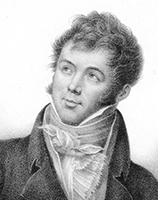
Born in Barcelona, Fernando Sor is a pivotal figure in the classical guitar world. Known as the “Beethoven of the Guitar,” Sor’s impact on classical guitar music is profound.
He wrote his famous Method for the Spanish Guitar in 1830. This laid the groundwork for classical guitar playing today.
His many compositions continue to be studied and performed to this day. They range from short studies to virtuoso masterpieces. One of his best-known works is his set of Variations on a Theme of Mozart. He also wrote music for orchestra, opera and ballet.
Known as the greatest guitarist of his time, he traveled across Europe and Russia. He popularized the classical guitar in England.
(Here’s a fun but gross fact. When he was living in Russia, Sor boiled his gut strings to keep them pliable in the cold temperatures.)
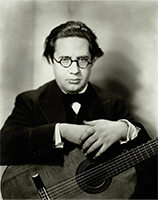 Andrés Segovia (1893-1987): The Revolutionary
Andrés Segovia was born in the small town of Linares. He made it his life’s work to elevate the classical guitar from its folk roots to the concert hall. Many think he is one of the most famous Spanish guitar players ever to have lived.
Segovia considered himself both a teacher and student in one body. His unique technique introduced the classical guitar’s expressive capacity to a new audience.
He also commissioned new works for the guitar from distinguished composers. He encouraged “the most interesting composers of this old world” to write for the instrument.
Segovia also worked with Augustine to produce the world’s first nylon strings. It’s hard to believe that until then, strings were still made from animal intestines.
Segovia was once so engrossed in his practice that he didn’t notice a fire starting in his room. He put it out and continued playing.
Francisco Tárrega (1852-1909): The Soulful Poet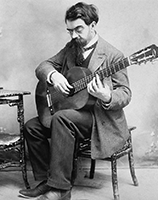
Francisco Tárrega was born in Villarreal. He composed during the late Romantic period.
His father encouraged him to play the guitar, but seemed to spend his childhood running away. On one such occasion, he fell into an irrigation ditch. This caused permanent damage to his eyesight.
When he was ten, the famous guitarist Julian Arcas took him to Barcelona to study with him. (Of course, he ran away, and tried to make a living playing in bars instead.)
With age comes maturity. Tárrega is now one of the most famous Spanish guitar players. He pioneered new techniques and pedagogical methods. And his philosophies were so ground-breaking, that a whole “Tárrega School” emerged.
He didn’t live to write a method, but his pupils championed his vision. They included Pujol and Llobet. This laid the foundations of modern classical guitar playing.
Tárrega also worked with Antonio de Torres Jurado: the most important guitar maker of the 19th century. Torres’ design became the forerunner of today’s modern classical guitar.
Tárrega’s soul-stirring Capricho Árabe is Spanish through and through. And his Recuerdos de la Alhambra could be the most iconic guitar piece ever written. A phrase from Gran Vals became one of the world’s most familiar tunes when Nokia used it as a ringtone.
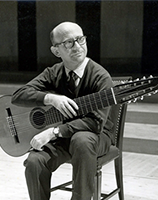
Narciso Yepes (1927-1997): The Ten-String Innovator
Narciso Yepes was born in the historic town of Lorca. He is famous for introducing the ten-string guitar to the world. He felt its range and depth brought back the forgotten sounds of ancient guitars.
Like Segovia, Yepes extended the guitar repertoire. He collaborated with composers who had not written music for the guitar before. And he was one of the first guitarists to adapt the Baroque music of Gaspar Sanz to the modern classical guitar.
Yepes was one of the first to perform Rodrigo’s Concierto de Aranjuez (1947). Along with Julian Bream, he created its huge popularity.
In 1952, he arranged the anonymous Spanish Romance for the film Jeux Interdits. It created a craze for the piece.
Miguel Llobet (1878-1938): The Catalonian Craftsman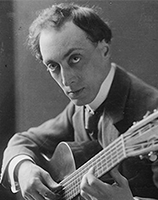
Miguel Llobet was the master of nuance and color. He found the sounds of street musicians in Barcelona inspiring. And he would take long walks in the city, soaking up the atmosphere.
His arrangements of the works of the Spanish composer Isaac Albéniz are much loved. But he is most famous for his reworkings of Catalan folk songs for classical guitar. The most popular of these is El Noi de la Mare.
Llobet studied with Tarrega and was himself a major influence on André Segovia. The students he inspired continued his musical vision.
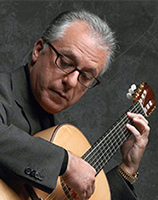 Pepe Romero (b. 1944): A Modern Icon
Pepe Romero was born into the Romero guitar dynasty (the “Royal Family of the Guitar”). He has been a member of the family Romero Guitar Quartet since 1960.
His playing shows technical prowess and emotional intensity. And he is at ease with classical or flamenco styles.
Romero’s career has spanned over half a century, recording over 60 albums. His playing embodies the spirit of Spanish music and keeps it relevant. Many composers have written for him, including Rodrigo and Moreno Torroba.
He received the Premio Andalucía de la Músicahe for his contribution to the arts in 1996. He was knighted into the Order of Isabella the Catholic by King Juan Carlos of Spain in 2000.
It’s said that, once, when a string broke in a concert, Romero continued to play. He later joked that the guitar had “six too many strings”.
Spanish Guitar Players: 7 Top Global Ambassadors of the Spanish Classical Guitar
The guitar’s history is rooted in Spain.
Works by Spanish composers are central to the classical guitar repertoire. The music of Rodrigo, Tárrega and Albéniz continues to affect audiences everywhere.
Here’s a selection of the most famous classical guitar players worldwide. All pay homage to the instrument’s Spanish heritage.
María Luisa Anido (1907-1996) – Argentina: The Emotional Alchemist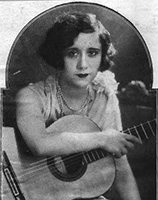
Maria Anido was a composer and performer, born to Spanish parents in Buenos Aires.
We can hear the influence of Argentinian folklore in her compositions. But her first album (1955) was A Spanish Guitar Recital. It included works by Granados, Sanz, Tarrega and Torroba. She played some of this at eye-watering speeds. Check out the recording here.
Anido said that her guitar was not an instrument but a companion that spoke the language of her soul. Her performances were emotional experiences, leaving audiences moved and transformed.
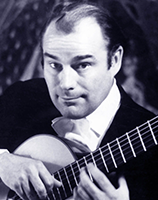 Julian Bream (1933 – 2020) – England: The Tonal Genius
Julian Bream redefined the landscape of classical guitar.
He had a profound love for Spanish music and brought a new depth and expression to the repertoire. He was the master of tonal colors. And he reported that he was much influenced by André Segovia and Tárrega.
In 1984 he made a film called ¡Guitarra! A Musical Journey Through Spain. In it, he explored the history and cultural significance of Spanish guitar music.
Like André Segovia, Bream commissioned distinguished composers to write for the classical guitar. He is well-known for working with William Walton on Five Bagatelles for Guitar (1971). And a video of the two discussing the music is still online.
This helped to extend music for the classical guitar beyond the Spanish tradition. Yet many of his recordings also feature Spanish composers.
Bream is largely responsible for turning the Concierto de Aranjuez into a global hit. In 1951, the BBC offered him £5 to learn and record it. The 17-year-old, who had never heard of it, thought the challenge deserved more. They agreed on seven guineas.
He recorded the concerto four times. “They’re all a bit different,” he said. “Some have more right notes than others.”
(See Julian Bream on banana fingers – and showing up anyway.)
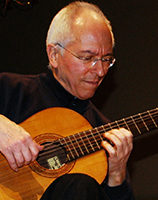 John Williams (b. 1941) – Australia: The Global Maestro
John Williams brought classical guitar music to a whole new audience in the 1960s and ’70s. Famous for a meticulous approach, he has impeccable technique and pristine clarity.
He has recorded 70 albums, and those featuring Spanish music and composers are too many to list. Some consider his recordings to be definitive interpretations of these pieces.
John Williams has commissioned several guitar concertos. This includes works from André Previn and Stephen Dodgson amongst others.
He is also keen to promote the guitar’s virtues as an ensemble instrument. He believes that young guitar students learn all-round musicianship by playing together. And he collaborates widely with different musical genres and artists.
David Russell (b. 1953) – Scotland: The Melodic Storyteller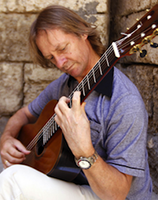
David Russell is world-renowned for his superb musicianship and inspired artistry. He was born in Scotland, but has lived in Spain for most of his life. His expressive playing captures the essence of Spanish music.
Russell’s dedication to Spanish composers has won him many accolades. His album Spanish Legends is a testament to the country’s influence on him. And many of his recordings set the standard for Granados, Issac Albeniz, Sor, Llobet and others. In 2005, he won a Grammy Award for his album Aire Latino.
David Russell speaks Spanish, Italian, Catalan, and Galician! In 2009, he became an honorary member of the Amigos de la Guitarra – the oldest guitar society in Spain.
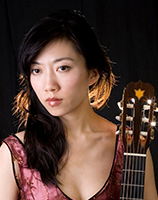 Xuefei Yang (b. 1977) – China: The Cultural Conduit
Xuefei Yang is one of the world’s finest classical guitarists.
Her journey began in Beijing where, until recently, the authorities banned Western music. She was the first guitarist to enter a music school in China. And the first internationally recognized Chinese guitarist on the world stage.
When she performed her debut (at the age of 14) in Madrid, Rodrigo was in the audience. She has championed Spanish (and Chinese) guitar music across the world ever since.
Yang is passionate about bringing classical guitar music to a wider audience. She is artistic director of Changsha International Guitar Festival. This always features Spanish and flamenco guitar music amidst a broad program. She collaborates with singers, dancers, and musicians across genres.
Xuefei Yang often performs with the Spanish flamenco dancer, Raquel de Luna.
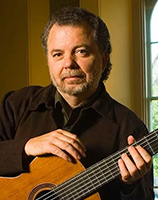 Manuel Barrueco (b. 1952) – Cuba: The Unique Artist
Manuel Barrueco is recognized as one of the most important guitarists of our time. Many of his students have garnered critical acclaim.
His repertoire is magnificently diverse, but his interpretations of Spanish compositions are revered. His album ‘Music from Cuba and Spain’ received two Latin Grammy nominations.
In 1997, he recorded Concierto de Aranjuez with the Philharmonia Orchestra. It was conducted by Plácido Domingo. Classic CD Magazine declared it the best-ever recording of the piece.
In 2010 he released an album called Tarrega! which was also nominated for a Latin Grammy award. Fernando Sor: the Beethoven of the Guitar came out in 2016.
Miloš Karadaglic (b. 1983) – Montenegro: The Mediterranean Magician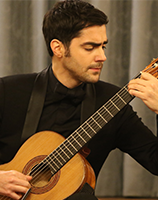
Miloš’s phenomenal success has again brought classical guitar to popular culture. He is becoming one of the most famous Spanish guitar players of the moment.
His debut album, Meditteraneo, features some of the greatest hits of Spanish classical guitar. Aranjuez contains two concertos by Rodrigo. These are the much-loved Concierto de Aranjuez and his Fantasía para un Gentilhombre.
Karadaglic has recorded various arrangements of rock and pop music. He describes his 2019 album Sound of Silence as “a personal scrapbook of popular music”. In August 2023 he played Aranjuez to more than sixteen thousand people. The concert was broadcast on German TV.
He is a passionate supporter of music education. And he’s a patron of several charities which promote opportunities for young musicians. Some feel he’s putting the classical guitar on the modern mainstream map.
10 Top Famous Flamenco Flames
Flamenco is a genre with deep roots in the folk music traditions of Andalusia.
The form encompasses music, dance and singing. It has vibrant energy, profound emotions, and intricate rhythms. It deploys specialist techniques such as rasgueado and fluent picados.
Flamenco style also reflects cultures that have influenced the region over centuries. These include Romani, Moorish, Jewish, and Spanish traditions.
Here are ten top guitarists who have turned Flamenco into a solo art form.
Paco de Lucía (1947-2014)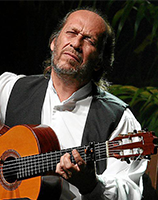
In Algeciras, the town hall clock commemorates him by playing his best-known song. Visitors can hear Entre dos Aguas twice a day.
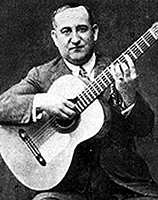
Carlos Montoya (1903 – 1993)
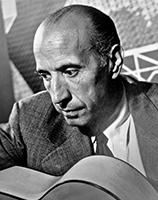
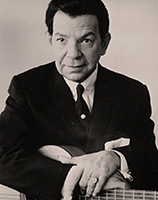
When the young Paco de Lucia met Sabicas for the first time, he declared, “I need to practice more (to) play like him.”
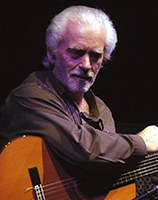
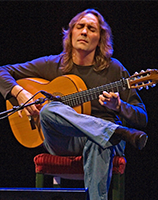
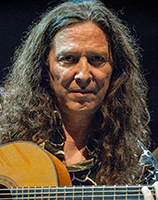
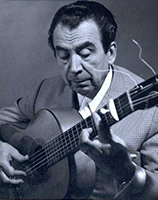
Gerardo Núñez (b. 1961)
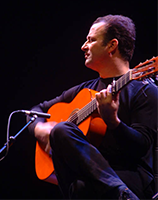
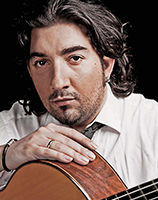
Antonio Rey Nava (b. 1981)
Antonio Rey is an accomplished performer and composer, born in Madrid.
He began his career by accompanying his father, Tony Rey, in various flamenco venues in Mexico. A few years later he toured Japan with the dancer Yoko Komatsubara. At 18, he worked for the ballet company of Antonio Canales, and composed music for several ballets.
His breakthrough album was Todo Lo Que Tengo. He has won many prizes, including a Grammy for his acclaimed album Flamenco sin fronteras.
Rey’s music consists of technical excellence and expressive melodies. As his career has progressed, he has begun to incorporate world music influences. His album A Trancas y Barrancas (2010) demonstrates an experimental approach.
He continues to tour, collaborate, and compose.
Today’s Spanish Guitar Players: The Legacy Continues and Reinvents
These guitarists – from Spain and across the globe – are not just astonishing musicians. They are storytellers, cultural ambassadors, and pioneers of the genre.
They ensure that the legacy of Spanish classical guitar continues. And that it inspires and enchants generations to come.
But these guitar virtuosi are not alone. Many other distinguished classical guitarists continue the legacy. They promote Spanish music on their tours, and through their recordings.
Others have broadened the appeal of Spanish guitar music to new audiences. They’ve brought the classical and flamenco style to a whole new generation. A generation who might not otherwise have discovered it.
Reinventing the genre
These artists mix Spanish guitar music with other forms of popular culture. It means the genre is always being reinvented. It’s kept in the public eye, staying fresh, exciting, and popular.
So here is our list of those stars who continue to champion Spanish and flamenco guitar music. It’s in alphabetical order, and we couldn’t include everyone. But these players are delighting audiences both old and new across the globe.
We salute them.
Charo: A Spanish-American musician and actress. Charo is known for her flamenco-style guitar skills and broad entertainment appeal.
Aniello Desiderio: A classical guitarist with a distinct voice. Desiderio plays with speed and precision. He performs all over the world, champions new music, and is an avid chamber music enthusiast.
He is co-founder of the World Guitar Ensemble, and duo partner to Zoran Dukic. His album Spain (2009) includes works by Pujol, Albeniz and Turina.
Al Di Meola: An influential jazz fusion guitarist. Al Di Meola incorporates elements of flamenco style into his playing.
Zoran Dukic: One of the most exciting classical guitarists of our time. He has a special affinity for Spanish and Latin American music. His spectacular virtuosity means he has won more prizes than any other guitarist.
In 1992, he earned a special prize for the best interpretation of Spanish music. He received this at the Guerrero International Guitar Competition in Madrid.
Marcin Dylla: Dylla’s focus is broad and encompasses various styles, including Spanish repertoire. In 2006, he performed a newly-discovered guitar work by Rodrigo, called ‘Toccata.‘
Eliot Fisk: Fisk was the last student of Segovia. In 2006, he was awarded the ‘Cruz de Isabel la Catolica’ by the King of Spain for his service to the cause of Spanish music.
Ricardo Gallén: Gallén is a distinguished Spanish guitarist. His recordings of Sor’s Sonatas are highly regarded. And his Rodrigo recordings are equally indispensable.
Gipsy Kings: This exciting flamenco-style group has reached global audiences. Its music appeals to young and old alike.
Sharon Isbin: Isbin has an all-encompassing repertoire, including a range of Spanish music. She released Spanish Works for Guitar in 1981. She also received a Latin Grammy Award nomination for her Concierto de Aranjuez in 2005.
Jesse Cook: A Canadian guitarist known for his fusion of Flamenco style with jazz and world music.
Irina Kulikova: Irina Kulikova blends Russian soul with passion. When she was 12, she met the great Spanish master José María Gallardo del Rey in Russia. Impressed, he bought her a Manuel Contreras guitar.
Ottmar Liebert: A German guitarist and songwriter who popularizes a mix of flamenco and new-age music. His melodic style and reaches a diverse listener base.
Paco Peña: Known for both traditional and modern Flamenco. Paco Peña has made a significant contribution to popularizing Spanish guitar.
Rodrigo y Gabriela: This Mexican guitar duo blends Flamenco, rock, and other genres. Audiences love their dynamic playing style.
Paval Steidl: Paval Steidl was born in what is now the Czech Republic. But he has lived in the Netherlands for many years.
He is a superb interpreter of C19th music in particular. He says he always likes to start his day by playing Sor’s studies. And he believes that Sor wrote some of the most important literature in the guitar canon.
Strunz & Farah: This duo blends Flamenco with Middle Eastern and Latin American music. They appeal to a wide range of listeners.
Ana Vidovic: Ana Vidovic’s contemporary approach demonstrates technical fluidity. She cites the flamenco player Paco de Lucia as a role model. She is not solely a Spanish guitar player but has recorded an album of music by Moreno-Torroba.
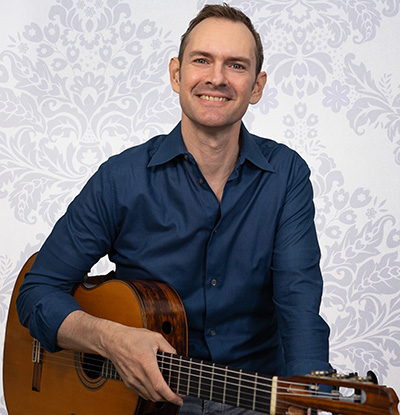
Hi, I’m Allen Mathews.
I started as a folk guitarist, then fell in love with classical guitar in my 20’s. Despite a lot of practice and schooling, I still couldn’t get my music to flow well. I struggled with excess tension. My music sounded forced. And my hands and body were often sore. I got frustrated, and couldn’t see the way forward. Then, over the next decade, I studied with two other stellar teachers – one focused on the technical movements, and one on the musical (he was a concert pianist). In time, I came to discover a new set of formulas and movements. These brought new life and vitality to my practice. Now I help guitarists find more comfort and flow in their music, so they play more beautifully.
Click here for a sample formula.
I have to say after over 12 months of one-on-one training with a teacher before joining The Woodshed, this is the first time that I feel I’m making technical progress.
~ Nusret Aydemir
-Nusret Aydemir
I am truly enjoying the growth and challenge that the Woodshed material provides. I look forward to working hard and learning much in the years ahead. Thanks for all the effort and care that you have taken in providing these lessons and resources!
~ Mark Whitsett
-Mark Whitsett
“Success lies in relentless execution of the basics.”
Join the program that takes you from the beginning fundamentals to advanced mastery, so you…
- Move your hands safely and fluidly
- Enjoy fulfilling practices and meaningful work
- Play beautifully with expression and flow
Click the button to take a step towards an
organized, effective guitar practice. >>>