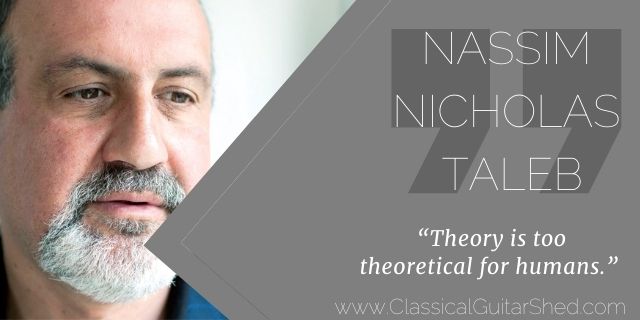
Nassim Nicholas Taleb on the Theory of Theory
Tuesday Quotes are short explorations of music, life, and the daily endeavor of practicing classical guitar. Find more here. Enjoy!
“Theory is too theoretical for humans.”
Nassim Nicholas Taleb
The words “music theory” can evoke a wide range of responses in guitarists. Some folks spark up and get curious. Others feel reverent, as if standing before an ancient text of wisdom.
And others feel confused and overwhelmed.
So it leads to the logical question: Do we need to learn music theory?
And this question is valid. But it’s not the only question. Follow-up questions are: When? and Why?
Music theory is all about context. It gives language to the relationships between notes and chords.
And the more advanced and mature we become as musicians, the more we can appreciate and use these contexts.
However, at the beginning of the musical journey, music theory can be TMI (too much information).
When we first learn to drive a car, we don’t need to know how fuel injection or disc brakes work. It’s not necessary, and we won’t use the information.
Instead, we focus on the skills used in driving. We keep our attention on what is practical for the current stage of learning.
Later, we can enrich our understanding as we navigate more complex paths. Or not, as we choose.
It’s the same in music. Music theory is a conceptual construct. We create this to better understand how music is put together. And as we advance, we can learn to use what we know to make musical decisions.
Music theory can help us shape our phrasing and expression. It can help us memorize music more quickly.
But music theory alone does not make a musician. First, we need our fingers to do what we tell them. And this takes intentional physical practice.
Scott Young, in his book, Ultralearning, writes: As the saying goes, “In theory, there is no difference between theory and practice. But in practice, there is.”
So should we study music theory? Yes, eventually. But as well as, not instead of, physical practice.
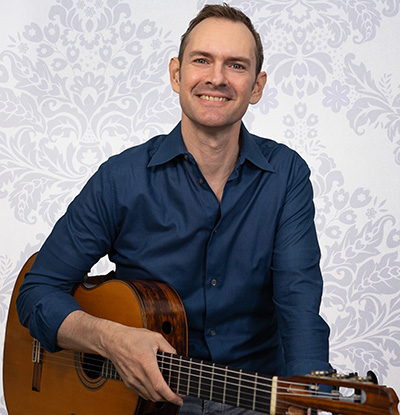
Hi, I’m Allen Mathews.
I started as a folk guitarist, then fell in love with classical guitar in my 20’s. Despite a lot of practice and schooling, I still couldn’t get my music to flow well. I struggled with excess tension. My music sounded forced. And my hands and body were often sore. I got frustrated, and couldn’t see the way forward. Then, over the next decade, I studied with two other stellar teachers – one focused on the technical movements, and one on the musical (he was a concert pianist). In time, I came to discover a new set of formulas and movements. These brought new life and vitality to my practice. Now I help guitarists find more comfort and flow in their music, so they play more beautifully.
Click here for a sample formula.
Hi Allen, just wanted to provide some feedback. Since I've started doing the exercises [in The Woodshed program] my guitar is sounding a lot better, with fuller sound, less effort. Its as if I bought a new guitar or got a new pair of hands (or both). Amazing my friend. Thank you!
~ Nusret Aydemir
-Nusret Aydemir
Those videos on practicing the piece were just awesome, Allen! I've always thought that learning songs might be something completely different than practicing exercises, but the way you teach it makes it much easier than I thought. I'm positive that joining the Woodshed has been the best investment I've ever done for learning the classical guitar. Thank you so much for these lessons.
~ Ulysses Alexandre Alves
-Ulysses Alexandre Alves
“Success lies in relentless execution of the basics.”
Join the program that takes you from the beginning fundamentals to advanced mastery, so you…
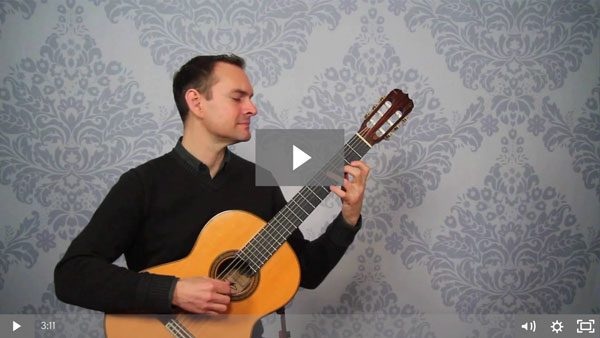
- Move your hands safely and fluidly
- Enjoy fulfilling practices and meaningful work
- Play beautifully with expression and flow
Click the button to take a step towards an
organized, effective guitar practice. >>>