
The Best Beginner Acoustic Guitar: All You Need to Know
It’s time to buy a beginner acoustic guitar. But which one is best?
The right guitar inspires us to play, helps us develop good habits, and makes learning fun. But with so many options out there, it’s easy to feel overwhelmed.
This guide explains how to find the best beginner acoustic guitar. We’ll discuss:
- playability
- sound quality
- durability
- price and affordability
Table of Contents

- What Makes the Best Beginner Acoustic Guitar?
- Playability: A Key Factor for Beginners
- Sound quality: Keeping Us Inspired
- Durability: Choosing a Guitar That Will Last
- Suitability: Finding the Right Fit
- Affordability: 4 Top Tips to Buying Your First Guitar
- More Considerations for Acoustic Beginners
- Best Beginner Acoustic Guitars: Final Thoughts
- FAQs
What Makes the Best Beginner Acoustic Guitar
A great beginner acoustic guitar is easy to play, sounds good, and is well-built. We want a quality instrument that’s comfortable and doesn’t strain our budget.
Flashy models might tempt us. But we should focus on finding a guitar that fits our needs.
This guide focuses on steel string acoustic guitars. These are common in folk, pop, and country music.
Classical guitars are also acoustic (unamplified). They differ in construction, sound, and playability. Many of the tips here apply to classical guitars too. For absolute beginners, classical guitars are often much more gentle on the fingers and have a mellow, pleasing sound.
Playability: A Key Factor for Beginners
Playability is one of the most important things to look for in a beginner guitar. Guitars come in different sizes, so we should ensure we are not trying to play something too big or too small for us.
Size and Weight: A guitar should feel comfortable on our knees. If it’s too heavy or bulky, we won’t want to play it for long.
Neck Feel: The neck should feel comfortable for our hand size. Some guitars have “rolled” fingerboards. The edges are smoothed to make it feel worn and natural.
Action: The “action” refers to the distance between the strings and the fretboard. A lower action (small gap) means it’s easier to press the strings down. This is kinder on our fingers, especially when we’re starting. The tension of the strings also affects the action.
Strap: Many acoustic guitars come with a strap button. This takes much of the weight onto our shoulders. It means we can play standing up. (Classical guitars don’t often have strap buttons.)
Sound Quality: Keeping Us Inspired
The better our guitar sounds, the more we’ll be motivated to play.
Tone
Our guitar’s “tone” is the quality of the sound we make when we pluck a string. It is often described by words like “bright”, “warm” or “tinny”.
Several factors contribute to a player’s tone. This includes the instrument’s build and how we pluck the strings.
For classical guitarists, tone is one of the most important parts of the music. Much has been written on the subject.
We don’t necessarily need an expensive guitar. If a beginner guitar has a “balanced” tone, it will still make our early experiences more enjoyable. (See FAQs.)
With experience, we can become more discerning. But to begin with, we can settle for a guitar that we like the sound of.
A teacher or shop assistant’s opinion is also helpful here. They can help us learn what to listen out for.
Durability: Choosing a Guitar That Will Last
Durability is another important factor. We want a guitar that can stand up to regular use. Most guitars are robust and the odd ding won’t affect the sound. Even so, it pays to buy a good quality gig bag or better still, a hard case.
Here’s what to look for:
Materials
Guitars are made from various types of wood known as “tonewoods“.
The type of tonewood used in our guitar can affect its lifespan. It also affects the way its tone develops.
- Hardwoods like mahogany are more resistant to wear and damage than softer woods.
- Softer woods like spruce may need more care to prevent physical damage.
Construction Quality
The internal bracing and glue joints play a big role in how long your guitar lasts. A well-built guitar can withstand the tension of the strings. It will also resist environmental changes.
Environmental Factors
Humidity and temperature changes can cause wood to expand, contract, or crack. Heat can cause glue joints to weaken. It’s best to try to avoid extreme conditions.
Many players use humidifiers or dehumidifiers. These are placed in guitar cases to keep the environment stable.
String Tension and Setup
The tension from the strings puts constant stress on the guitar. A guitar with very high string tension can warp the neck or cause the bridge to lift over time.
Some guitars have truss rods that can be altered to stabilize the neck. We can also check regularly that the bridge is secure.
Classical guitars usually need very little or no set-up. The most common change is to the height of the action. This is achieved by adjusting the saddle or bridge. Few classical guitars have a truss rod.
Fretwear
Metal frets can wear over time. Durable fret materials (like nickel silver or stainless steel) can slow this down.
It’s a good idea to clean the frets each time we change strings.
Suitability: Finding the Right Fit
So we’ve looked at playability, sound quality and durability. But our new acoustic guitar also needs to suit us.
Here are some key factors to consider:
Body Size and Shape
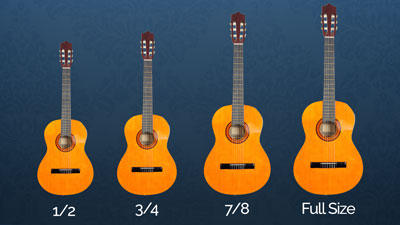
An acoustic guitar’s body is usually larger than that of a classical guitar.
We want it to be comfortable. Our strumming or plucking arm should rest naturally on the body. Our fretting hand should easily reach the neck without stretching.
The best advice is to visit a reputable store and have a teacher or staff member assess the guitar against you.
- Smaller acoustic guitars might be easier for some people, especially younger players. These are sometimes called “parlor” shapes. Many intermediate and pro players also appreciate a compact size when traveling.
- Some brands make three-quarter-size acoustic guitars for children (or smaller adults). Three-quarter-size classical guitars are very common. We can also find classical guitars with a full-size neck, but a 7/8th body.
- The most recognizable of acoustic guitar shapes is the “Dreadnought“. Dreadnoughts are bigger than other shapes and have a fuller sound.
Tonewoods
The type of wood used affects both the guitar’s sound and how long it lasts. Hardwoods tend to be more durable. But even softer woods like spruce or cedar can offer unique tones. Cedar might be described as “warmer” than spruce. Spruce is “brighter”.
Our choice of tonewoods will depend on what sound we prefer. It also depends on the extent of our budget.
Sustainability
Many guitar woods are endangered. Over-extraction leads to deforestation and loss of biodiversity.
Export certificates are now needed for certain woods such as rosewood and bubinga. And it is now forbidden to export some types of wood. Endangered woods include:
- Rosewood
- Ebony
- Honduras Mahogany
- Cocobolo
More luthiers and manufacturers are now using sustainable woods. Some restrict their stock to wood that’s fallen naturally, or to ‘urban’ local materials.
The topic of sustainability and guitar woods is a complicated one. We can help by ensuring that we only buy from manufacturers that use sustainable woods.
String Types
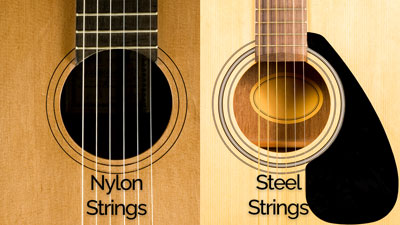
Acoustic guitar strings are generally made from steel strings. They’re commonly used for rock, pop, and country music.
Steel strings produce a bright, loud sound but can be tough on our fingers when we’re starting. For this reason, many players begin on a classical guitar with nylon strings.
Nylon strings are softer and easier on the fingertips. They are a popular choice for classical, flamenco, and folk music. They produce a warm, mellow tone.
Strings come in different gauges (thicknesses). Lighter gauge strings are easier to press down but offer less volume. Heavier gauge strings have a richer tone but need more finger strength.
Finding the right strings can make our early guitar practice more comfortable.
Affordability: 4 Top Tips for Buying Your First Guitar
It’s easy to get overwhelmed by choice, but finding the right balance between quality and cost is key.
Here are some four tips to help you afford the best acoustic guitar.
1. Set a Budget
If we can, we should set a budget and stick to it. We should aim to get the best quality within our price range. Very cheap instruments may not stay in tune, and can be harder to play. This can easily demoralize beginners.
A serviceable acoustic guitar can often be found between $150 and $300. We might find a decent-quality classical guitar for around $300 – $1000.
2. Try Before You Buy
Whenever possible, visit a store to try different models. The sound and feel of the guitar in our hands will help us decide.
When testing guitars, don’t just strum a chord. Play notes at different frets. Listen for any buzzes or rattles. Turn the tuning keys a few twists in each direction. The smoother, the better.
Compare the high notes to the low notes. While higher notes will be thinner, there should be a decent balance of volume.
If you find anything wrong (trust your instincts), ask the store to alter or fix it. (Or keep looking.)
3. Look for Bundles
Many starter packs come with extra accessories. These can include tuners, strings, music books, tuition DVDs or gig bags. These bundles can be a good deal. But don’t sacrifice getting a better-quality guitar for the sake of a free tuner.
4. Consider Used Guitars
Tempting as it is to buy shiny and new, we might be able to get a better quality guitar secondhand. A pre-loved guitar can offer excellent value. Especially if it’s been well cared for. The odd knock or scrape is not going to affect the sound. And old guitars often have a richer tone because the wood is aged.
Take care if buying online. It is difficult to tell whether a neck is bowed or if a guitar is dehydrated by looking at a picture. It’s best to buy from a reliable source. If not, at least make sure someone experienced can examine the instrument before you buy.
More Considerations for Acoustic Beginners
- Care for Your Beginner Acoustic Guitar: Keep your guitar in a case when not in use to protect it from dust and moisture. Regularly wipe your strings with a soft cloth to prolong their life and prevent fret wear. Keep an eye on humidity and store it in a proper case to avoid damage.
- Consistent Practice: Consistent practice is the key to progress. Set up a routine, and make sure you have all your materials ready. Practice a little every day, and you’ll see improvement over time.
Would you like the Fast Track to be more proficient and fluent on guitar in the least time possible?
Best Beginner Acoustic Guitars: Final Thoughts
When choosing a guitar, we want to balance comfort, durability, sound quality and price. We need a guitar that’s good value. But we need one that will suit us.
Once we’ve done our research, we need to try out any guitar we are considering buying. Only then will we know it’s the one for us.
The guitar that feels right for us will help keep us motivated to practice and improve. No matter our budget, there’s a guitar out there that can help start our musical journey.
FAQs
What is the best body shape for a beginner acoustic guitar?
Smaller acoustic guitar body shapes are often more comfortable for beginners. Their size is more manageable. Many beginners start with a classical guitar which has a smaller body than a dreadnought.
Should I start with nylon or steel strings?
Like an electric guitar, acoustic guitars are usually fitted with steel strings. Steel strings are brighter and louder. They are more commonly used for pop and rock music.
Nylon strings are softer and easier on the fingers. This makes them the preferred choice for many beginners. They are also a good choice for those interested in classical guitar music.
What is a “balanced tone”?
Each note we play is made up of various “frequencies.” The “fundamental” frequency is the primary pitch we hear, while the “harmonic” frequencies add depth and richness to the sound.
A “balanced tone” means that frequencies across the bass, midrange, and treble are evenly distributed. No single range should dominate the others. A balanced tone prevents the guitar from sounding too “boomy” or “tinny.”
How much should I spend on a beginner acoustic guitar?
Set a budget and aim for the best quality within your price range. Even less expensive guitars can offer good playability and sound quality.
A serviceable acoustic guitar can often be found between $150 and $300. We might find a decent-quality classical guitar for around $300 – $1000.
Is there finance available to buy beginner guitars?
Yes. Many stores offer in-store financing or leasing arrangements to help you buy. These options make it easier to buy instruments without an upfront financial burden.
In the UK, the Take It Away scheme offers interest-free loans for musical instruments.
Can I teach myself acoustic or classical guitar?
Yes, it’s possible to teach yourself acoustic guitar. Many people start by learning basic chords, strumming patterns, and popular songs on their own. Consistent practice is key, and while it may take time, you can make great progress on your own.
Classical guitar can be a bit more complex because it involves fingerstyle techniques and reading music.
While you can still teach yourself, having structured lessons can help you develop good habits and avoid common mistakes. Classical Guitar Shed offers great resources for learning classical guitar, including free lessons, videos, and tutorials designed for beginners. Classical guitar techniques are valuable transferable skills. They improve your playing in any guitar genre.
Whether you’re learning acoustic or classical guitar, it’s good to set aside regular practice time and use quality learning materials. This will help you build a strong foundation.

Hi, I’m Allen Mathews.
I started as a folk guitarist, then fell in love with classical guitar in my 20’s. Despite a lot of practice and schooling, I still couldn’t get my music to flow well. I struggled with excess tension. My music sounded forced. And my hands and body were often sore. I got frustrated, and couldn’t see the way forward. Then, over the next decade, I studied with two other stellar teachers – one focused on the technical movements, and one on the musical (he was a concert pianist). In time, I came to discover a new set of formulas and movements. These brought new life and vitality to my practice. Now I help guitarists find more comfort and flow in their music, so they play more beautifully.
Click here for a sample formula.
Hi Allen,
First public performance ever! I am up to Level 1E in The Woodshed program. It is certainly mega helpful.
~ Peter Graham
-Peter Graham
After more than a year as a member, I remain impressed with the Woodshed, song courses, Tuesday quotes, weekly lessons, and the CGS community. Without my membership, I think my enthusiasm for learning classical guitar would have faded long ago. Instead, I am enjoying the process as I make steady progress in my playing.
~ Steve Dosh
-Steve Dosh
“Success lies in relentless execution of the basics.”
Join the program that takes you from the beginning fundamentals to advanced mastery, so you…

- Move your hands safely and fluidly
- Enjoy fulfilling practices and meaningful work
- Play beautifully with expression and flow
Click the button to take a step towards an
organized, effective guitar practice. >>>